

NSAM-ML Consortium
Acknowledgement
This website is supported by the National Nuclear Security Administration (NNSA) Minority Serving Institutions Partnership Program (MSIPP) of the U.S. Department of Energy (DOE) as part of award number: DE-NA0004112. The contents are those of the author(s) and do not necessarily represent the official views of, nor an endorsement, by DOE, NNSA, or the U.S. Government. For more information, please visit NNSA Minority Serving Institution Partnership Program (MSIPP) | Department of Energy.
Overview
The Consortium for Nuclear Security Advanced Manufacturing Enhanced by Machine Learning (NSAM-ML), was established in October 2021 with the support of the Minority Serving Institution Partnership Program (MSIPP), a National Nuclear Security Administration (NNSA) program. NNSA is an agency within the Department of Energy (DOE). The consortium is founded on a collaborative partnership between North Carolina Central University (NCCU), Elizabeth City State University (ECSU), Southern University Baton Rouge (SUBR), and two major NNSA national laboratories: Sandia National Laboratories (SNL) and Los Alamos National Laboratory (LANL). It also integrates support from the Center for Integrated Nanotechnologies (CINT) through three user grants offered to the PIs. CINT is an advanced research facility co-managed by SNL and LANL, and a supplemental fund paid by NNSA to our partners at SNL and LANL to support the Consortium faculties, scientists and students. The director of the Consortium is Prof. Abdennaceur Karoui who is also the Lead PI.
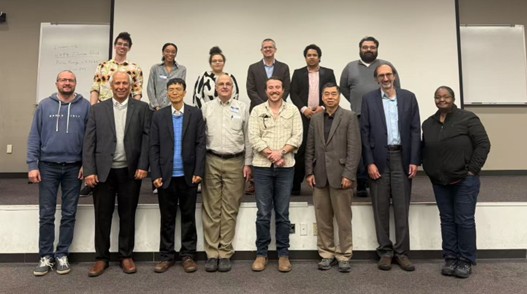
The NSAM-ML consortium extends its reach through collaborations with leading research groups from prominent universities excelling in materials science and engineering, particularly North Carolina State University (NCSU) and Old Dominion University (ODU). These collaborations strengthen the consortium’s multidisciplinary approach to advanced manufacturing, materials research, and machine learning applications. Additionally, the consortium leverages cutting-edge research facilities such as CINT, Chapel Hill Analytical and Nanofabrication Laboratory (CHANL) and the NCSU Analytical Instrumentation Facility (AIF) to expand its capabilities and drive innovative breakthroughs.
Following Prof. Karoui’s transition to ECSU in September 2023, the leadership of the consortium was officially transferred to Elizabeth City State University, further reinforcing ECSU’s role in advancing the consortium’s mission. This transition has significantly benefited the consortium, as students from the Engineering Technology Department showing strong enthusiasm for engaging in various consortium projects, ranging from advanced manufacturing and materials design to computational materials research. Additionally, ECSU is developing a Materials Engineering concentration within the Engineering Technology program, aligning its academic offerings with the consortium’s goals.
Two new certificate programs namely: i) Additive Manufacturing and ii) Materials for Renewable Energy are also being developed with the consortium’s support, with faculty members actively contributing to their creation.
The Applied Mathematics graduate program at ECSU offers students opportunities to pursue thesis projects that address complex mathematical models in materials science and advanced manufacturing, utilizing modern approaches such as machine learning methods. Moreover, students from the Computer Science and undergraduate Applied Mathematics programs have become integral to the consortium’s computational materials activities, further enhancing its multidisciplinary research and development efforts.
At its inception, the consortium capitalized on the prior research projects of the principal investigators and the existing infrastructures at the three minority-serving institutions (MSIs). These resources were significantly expanded during the first three years, marking the consortium’s initial phase of development.
Today, the teams at the three MSIs have established a more productive research environment and an innovative educational experience, aimed at addressing critical national concerns in areas of interest to the NNSA and DOE. The collaborations formed through the consortium leverage the expertise and resources of the MSIs and NNSA laboratories, with the goal of creating sustainable research programs at the three member universities across five key thrust areas:
- Discovery and Development of Super-materials, either capable of withstanding extreme environments and radiations or fabricated under extreme conditions, as well as new functional nanocomposites.
- Sensor Physics and Materials Science and Engineering for the development of devices to monitor the health of nuclear infrastructure and for other critical applications.
- Advanced Manufacturing, to develop the science and technology that leads to new paradigms in the fabrication of nanomaterials, adapted to digital manufacturing.
- Nanostructured High-efficiency Photocatalysts for solar energy harvesting, including the production of hydrogen via water splitting or the conversion of carbon dioxide into alternative fuels or high-value hydrocarbon materials.
- Machine Learning Methods to accelerate materials discovery and the development of advanced fabrication processes, providing new methods and techniques that support advancements across the other thrust areas.
The overarching goals of the participating faculties and scientists are twofold: 1) to produce scientific breakthroughs in each of the above thrust areas, and 2) to actively engage students in this research, fostering innovation and educational development.
After Phase 1, which lasted three years under the leadership of Dr. Karoui at NCCU, and following the first year of Phase 2, the Consortium successfully defined its Roadmap for research and educational endeavors. A brief version of the roadmap can be found at this link.
Consortium Member Universities
Elizabeth City State University (ECSU) – Lead PI: Prof. Abdennaceur Karoui, co-PI: Prof. Bijandra Kumar
North Carolina Central University (NCCU) – co–PI: Prof. Branislav Vlahovic
Southern University Baton Rouge (SUBR) – co–PI: Prof. Shizhong Yang
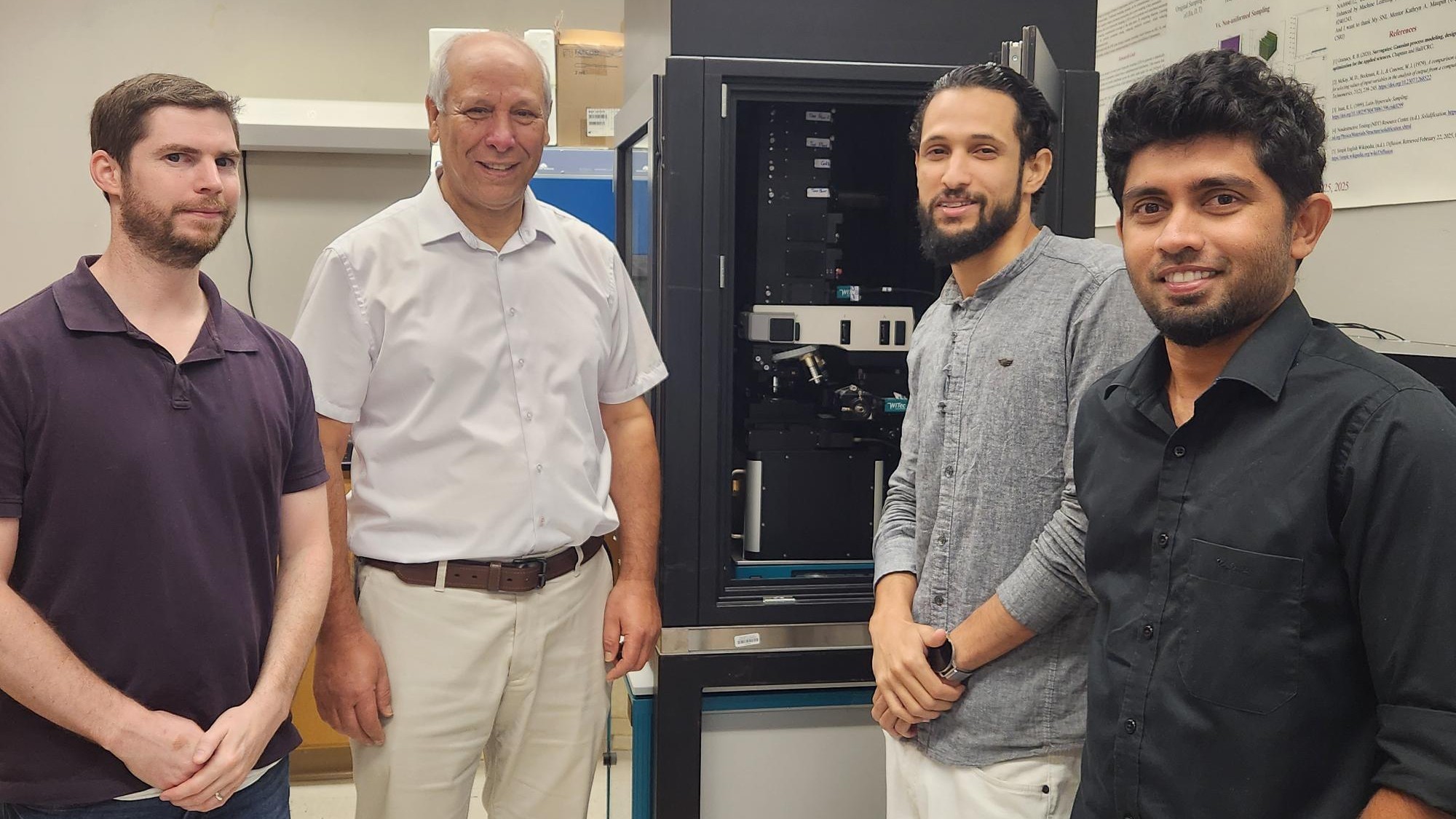
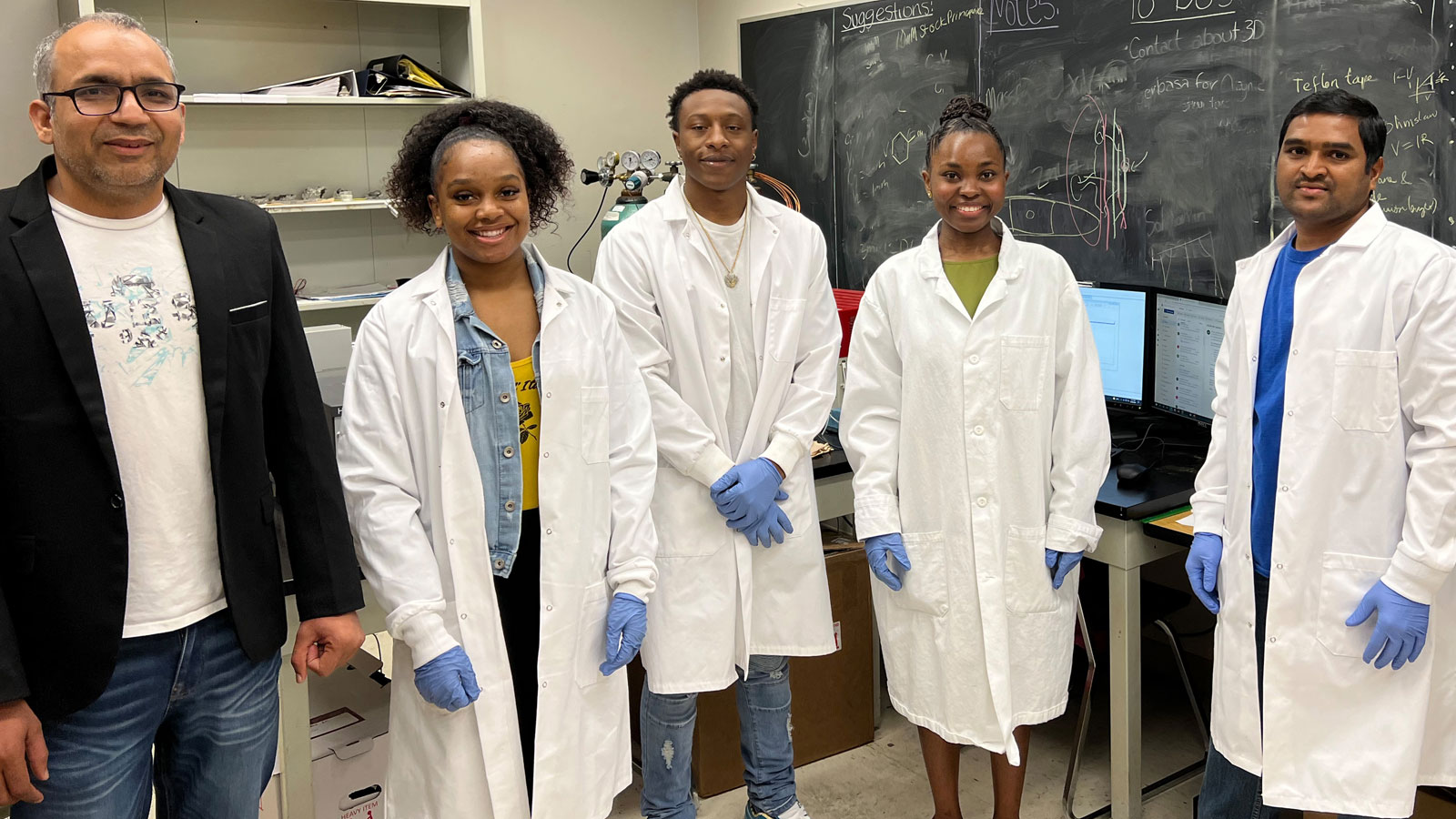
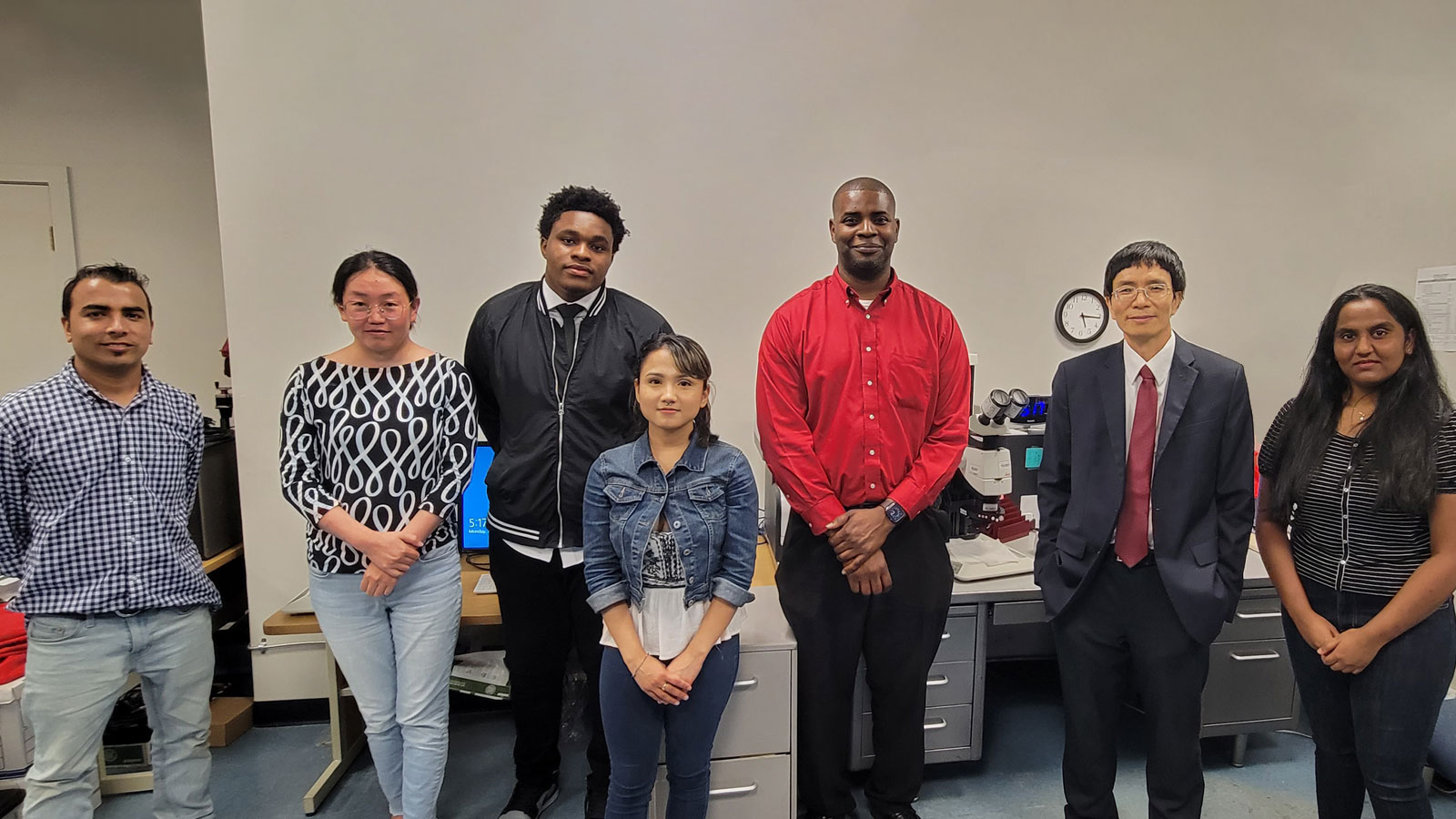
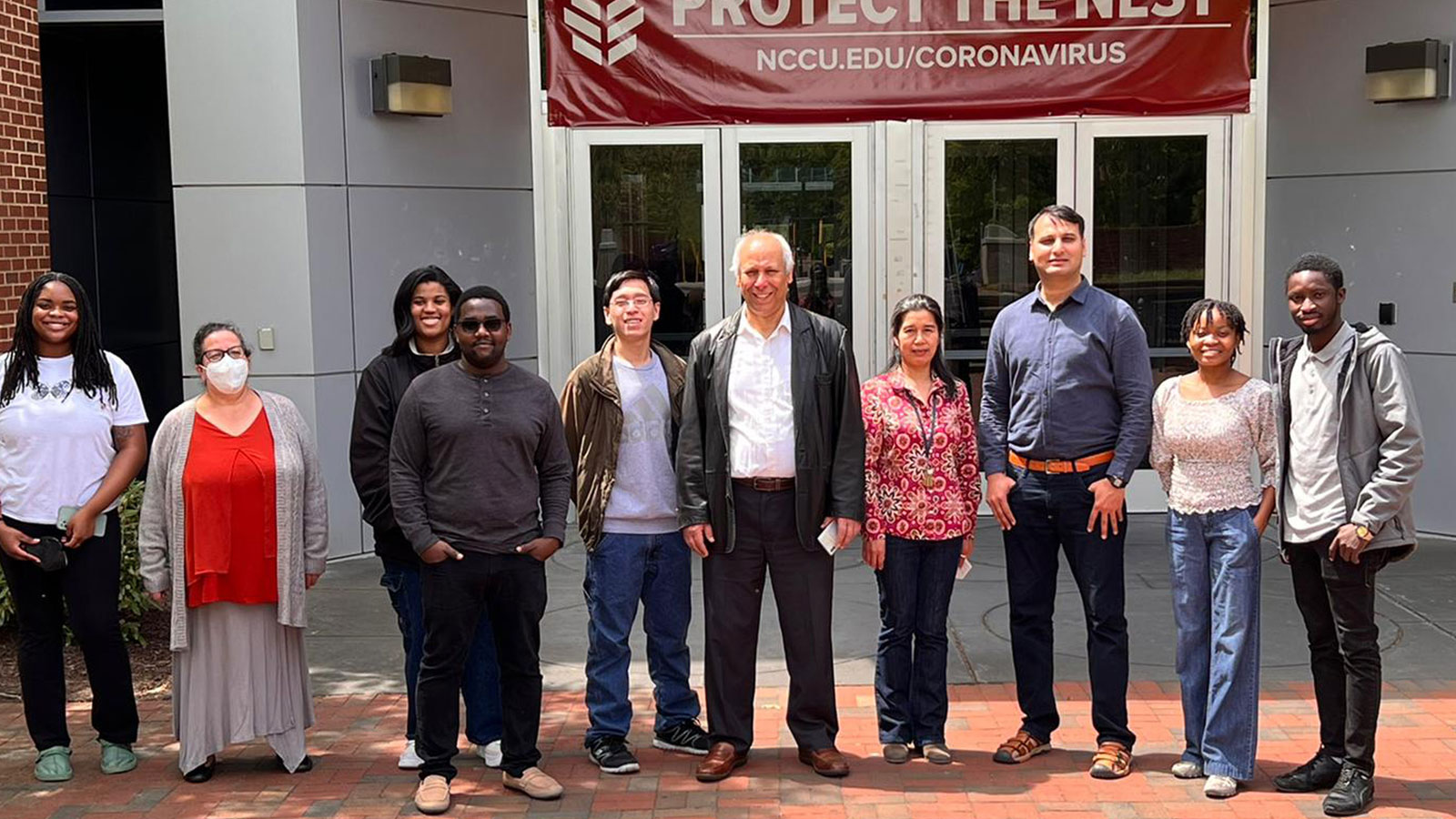
Not Pictured: North Carolina Central University, Dr. Vlahovic and his team
Consortium Partners and NNSA Laboratories
Sandia National Laboratories (SNL)
- Research Foundations at SNL
- Materials Science Research
- Center for Computing Research
- Computing and Information Science
- Publications
- Awards
Los Alamos National Laboratory (LANL)
- Ion Beam Materials Lab
- Los Alamos National User Facilities
- Capability Pillars
- Los Alamos Science Facilities